
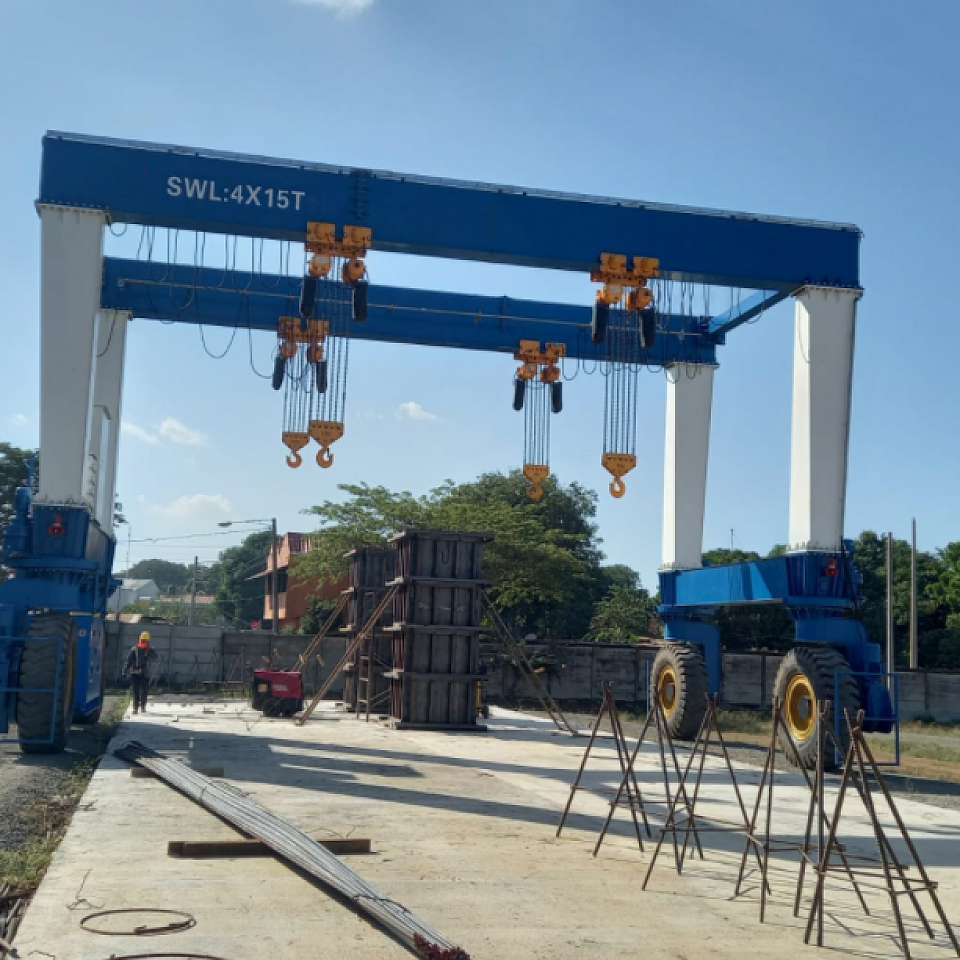
Rubber tyre gantry (RTG) cranes are a cornerstone of modern material handling systems, widely used in container yards, logistics terminals, and industrial manufacturing sites. Their versatility, mobility, and adaptability make them ideal for handling a wide variety of loads. However, not all loads are the same — some are oversized, irregularly shaped, or require specific handling conditions. To ensure optimal performance, safety, and cost-efficiency, manufacturers must tailor the structure of RTG cranes to meet the unique load characteristics of each application.
This article explores how engineers and crane manufacturers design and customize rubber tyre gantry crane structures to accommodate different load types, weight distributions, and operational conditions, ensuring precision, durability, and performance in every lift.
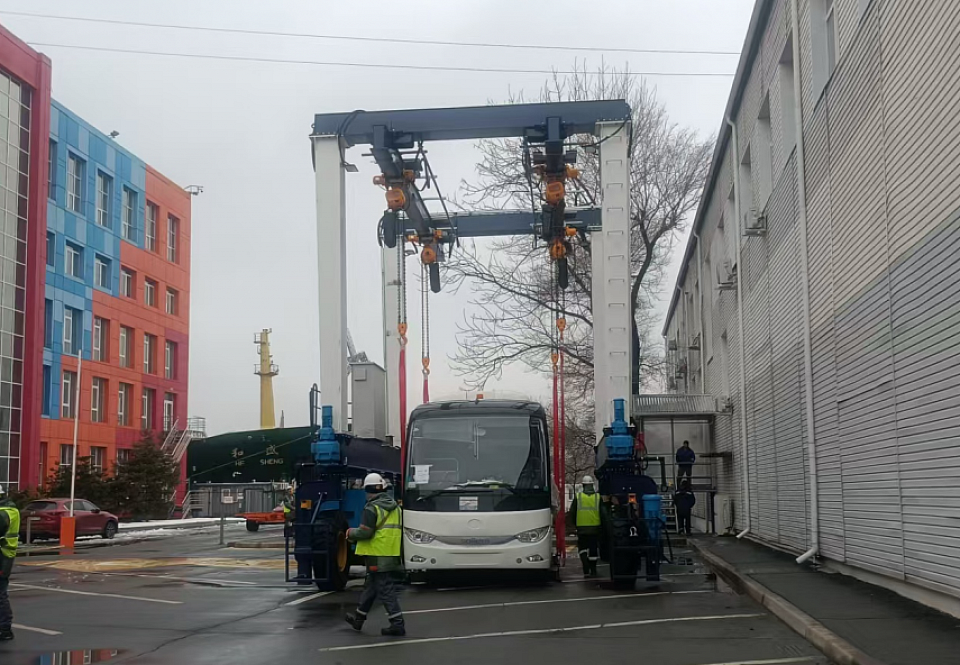
Custom Structural Design for Safer and More Efficient RTG Crane Operations
The structure of a rubber tyre gantry crane determines its overall load-bearing capacity, stability, and flexibility. A typical RTG crane consists of a main girder system, leg frames, trolley beam, hoisting mechanism, and rubber tyres with a steering system. Each of these components contributes to how effectively the crane can lift and transport specific loads.
When tailoring the structure, engineers consider not just the crane’s total rated capacity, but also load distribution, center of gravity, span width, lifting height, and dynamic forces during movement. This customization ensures that the crane can handle unique materials — whether they are long precast beams, heavy machinery, or containers stacked in tight spaces — without compromising balance or control.
1. Assessing the Unique Load Characteristics
The first step in structural customization is understanding the specific properties of the load. These characteristics determine what kind of RTG crane configuration will work best:
Weight and size: Heavier or longer loads require reinforced girders and a broader base frame to distribute stresses evenly.
Shape and geometry: Irregularly shaped items such as precast concrete elements or steel structures may demand specialized spreaders or multi-point lifting mechanisms.
Center of gravity: Loads with an off-center gravity point necessitate advanced stability features and adaptive hoisting control.
Material sensitivity: Fragile items may require smooth, low-sway lifting systems and soft-start drives to minimize impact during handling.
Through detailed analysis — often supported by 3D simulation and finite element analysis (FEA) — engineers can determine how the crane’s structure should be designed or reinforced to ensure safe operation under all load conditions.
2. Adapting the Main Girder Design
The main girder is the backbone of any RTG crane, and its configuration significantly affects how the crane behaves under load. For standard container handling, a single or double box girder design is sufficient. However, for unique or heavy-duty loads, the girder structure may need modification in several ways:
Enhanced girder depth and thickness: Increasing the girder’s section size provides greater bending resistance for long-span or high-load applications.
Use of high-strength steel: Incorporating materials like Q345B or Q460 structural steel improves fatigue resistance and extends service life.
Customized span width: The span can be tailored to fit specific operational layouts — for example, wider spans for handling large precast beams or narrower spans for compact industrial yards.
Integration of modular girders: Modular or bolted girder structures simplify transport and assembly while maintaining load-bearing performance.
By adjusting these parameters, engineers ensure the girder system can safely accommodate varying load sizes and configurations without deformation or instability.
3. Optimizing the Leg Frame Structure
The leg frames of an RTG crane play a critical role in transferring loads from the main girder to the ground through the tyres. When dealing with unconventional loads, the leg structure may be asymmetrical or reinforced to support specific handling needs.
For example:
Asymmetrical leg design can be applied when lifting loads positioned off-center or when operating in spaces with uneven ground.
Reinforced box-section legs are used in heavy duty gantry cranes where torsional loads are significant.
Adjustable-height leg designs allow cranes to handle loads of varying heights or operate across different surface elevations.
These design considerations help distribute stresses more evenly and improve stability during lifting and traveling operations.
4. Engineering the Hoisting and Trolley Systems
The hoisting mechanism and trolley system are directly responsible for handling the load, so their design must align perfectly with the crane’s structural adaptations. When tailoring the RTG structure, engineers may introduce:
Multiple lifting points or spreader beams for long or multi-part loads.
Variable-speed drives to allow precise positioning of sensitive or fragile materials.
Anti-sway and synchronization controls to maintain load balance when using dual hoists or when lifting long beams.
Customized trolley rails and wheel spacing to ensure smooth motion across the girders even under eccentric loads.
These enhancements are especially vital in applications such as precast concrete plants, steel fabrication yards, and renewable energy component handling, where loads often vary dramatically in shape and weight.
5. Customizing the Rubber Tyre Configuration
The rubber tyre system gives the RTG its mobility, but it also influences load stability and ground pressure distribution. For cranes that must handle unique loads or operate on diverse surfaces, customization may involve:
Different tyre numbers and arrangements (e.g., 8, 16, or 20 tyres) to match load capacity and ground conditions.
All-wheel steering systems allowing multiple steering modes (e.g., straight, diagonal, or carousel) to navigate narrow spaces or heavy-load turns.
Automatic alignment and suspension systems to compensate for uneven ground and maintain stability.
Higher-capacity drive axles for cranes handling extra-heavy materials.
These adaptations ensure smooth, controlled travel and safe load movement even under challenging site conditions.
6. Incorporating Advanced Control and Safety Systems
Structural customization goes hand in hand with intelligent control. For cranes handling unique loads, safety and precision are paramount. Manufacturers integrate:
Load monitoring systems that detect overload or uneven load distribution.
Anti-sway technology to stabilize suspended loads.
Collision avoidance systems to protect the crane structure and nearby assets.
Automatic steering and travel synchronization for multi-crane or tandem lifting operations.
These systems not only protect the crane’s structure from fatigue and stress but also increase operator confidence and productivity.
7. Structural Testing and Validation
Before deployment, tailored RTG cranes undergo comprehensive load testing and structural verification. Manufacturers perform static, dynamic, and fatigue testing to confirm that the modified structure meets safety and performance requirements. In many cases, prototype cranes or digital twins are used to simulate years of operation and detect any potential weak points.
Such rigorous testing ensures that every tailored RTG crane performs reliably throughout its service life, even under demanding load conditions.
8. Case Examples of Tailored RTG Crane Structures
Precast concrete industry: Cranes are designed with long spans and dual lifting trolleys to handle elongated beams safely.
Wind energy component handling: Wide-span cranes with reinforced girders lift bulky nacelles and blades without structural deflection.
Steel coil storage yards: Compact yet heavy-duty RTGs feature tighter wheelbases and high-precision hoists for dense material handling.
Shipyard operations: Custom cranes use adjustable spreaders and corrosion-resistant structures for lifting boat hulls and ship sections.
These examples highlight how structural tailoring enhances operational efficiency across multiple industries.
Conclusion
Tailoring the structure of a rubber tyre gantry crane for unique load characteristics is not merely a design preference—it is a necessity for achieving safety, reliability, and efficiency in specialized lifting operations. Every modification to the girder, leg frame, hoisting system, and tyre configuration contributes to a crane that is perfectly suited to its working environment and load profile.
Through advanced engineering, material optimization, and intelligent control integration, manufacturers like AICRANE deliver custom RTG solutions that handle the most challenging loads with confidence. Whether for container handling, precast lifting, or heavy industrial use, a structurally tailored RTG crane ensures that every lift is executed with precision and safety — perfectly aligned with the demands of modern industries.
