
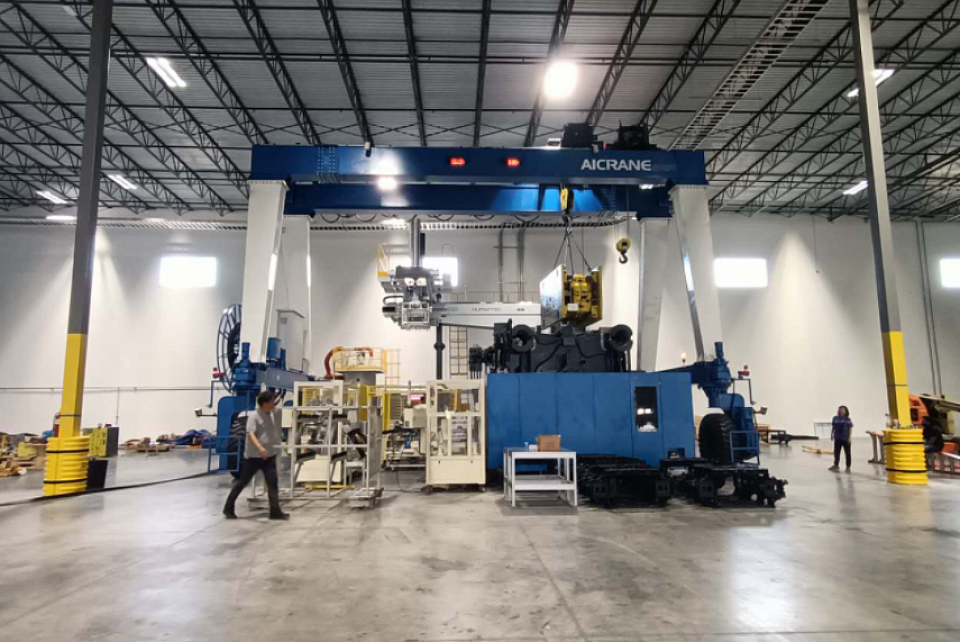
Reliable Power Solutions for Warehouse Gantry Cranes
Warehouse gantry cranes are indispensable in modern material handling operations, offering flexibility and efficiency in lifting and transporting heavy loads across large indoor spaces. However, the performance of these cranes depends heavily on their power supply systems. Without a reliable and efficient method of delivering electricity to the crane's motors and control systems, even the most robust gantry crane cannot operate safely or effectively. In warehouse applications, three primary power supply systems dominate: cable reels, busbars, and festoon systems. Understanding their working principles, advantages, limitations, and appropriate applications is crucial for warehouse operators, engineers, and maintenance personnel.
Overview of Gantry Crane Power Requirements
The warehouse gantry cranes typically require power for multiple functions, including hoisting, trolley movement, bridge travel, and auxiliary equipment like lights and control systems. The voltage and current demands vary depending on crane capacity, span, and operational duty cycle. For instance, a 20-ton gantry crane will have different electrical requirements compared to a 50-ton crane operating in a high-frequency logistics warehouse.
The crane’s power supply system must not only meet these electrical demands but also provide smooth and uninterrupted energy flow while accommodating the crane’s movements across the warehouse floor. Additionally, safety is paramount, since any failure in power delivery can result in dropped loads, equipment damage, or personnel injury.
Cable Reels for Gantry Cranes
Cable reels, also known as conductor reels, are one of the most common methods for supplying power to mobile gantry cranes. A cable reel consists of a spool, typically spring-driven or motor-driven, that stores a flexible power cable. The cable extends and retracts as the crane moves along its runway, maintaining tension to prevent tangling.
Working Principle
The cable reel supplies electrical power through a continuous copper or aluminum cable wound around a rotating drum. The crane’s movement unwinds the cable from the reel, and spring or motor tension ensures the cable remains taut. Connections are made via terminals or slip rings at the crane end to deliver power to the hoist and trolley motors.
Advantages
Flexibility in Movement: Cable reels allow the crane to travel significant distances along the runway without being restricted by fixed wiring. This is especially useful for long-span warehouses.
Compact and Simple: The system is relatively compact and easy to install, requiring minimal structural modifications.
Low Maintenance: With proper inspection and lubrication, cable reels have a long service life and minimal downtime.
Limitations
Cable Wear and Tear: Continuous movement can lead to abrasion and fatigue of the cable insulation.
Limited Length: Extremely long runways may require multiple reels or a combination with other power systems.
Potential for Tangling: Incorrect tension or improper installation can cause the cable to tangle or kink, leading to operational interruptions.
Busbar Systems for Gantry Cranes
Busbars provide a rigid, continuous path for electrical current and are particularly suitable for high-voltage and high-current applications. In warehouses, busbars are usually installed along the crane runway, delivering power via sliding contacts or collector shoes attached to the moving crane.
Working Principle
A busbar system consists of conductive bars (usually copper or aluminum) mounted on insulators along the length of the crane runway. The moving crane has a collector shoe or brush assembly that slides along the busbar, maintaining a continuous electrical connection. Power is then distributed to the crane’s hoist and travel motors.
Advantages
High Current Capacity: Busbars can handle higher currents than cable reels, making them suitable for heavy-duty gantry cranes.
Stable Power Supply: Since the connection is rigid, voltage fluctuations are minimal, ensuring smooth crane operation.
Durable and Long-Lasting: Busbars are less prone to mechanical damage compared to flexible cables and have a long operational life.
Limitations
Installation Complexity: Busbar systems require precise alignment and structural support along the entire runway.
Higher Initial Cost: Compared to cable reels, the upfront cost of busbar installation is higher due to materials and labor.
Reduced Flexibility: Modifying or extending a busbar system is more difficult compared to cable reels or festoon systems.
Festoon Systems for Gantry Cranes
Festoon systems, often called cable trolleys, are widely used in warehouse gantry cranes because of their adaptability and relatively low installation cost. This system consists of a series of rollers or trolleys mounted on a runway or overhead track, supporting a looped cable or bundle of cables.
Working Principle
The festoon system supports the crane’s power cable along its travel path using trolleys that move with the crane. The cable is typically looped between the fixed end and the crane, forming a hanging arrangement. As the crane moves, the cable slides along the trolleys, preventing drag or snagging. The cable loops back to a fixed point, creating a continuous power supply path.
Advantages
Ease of Installation: Festoon systems are relatively simple to install and adapt to different crane spans.
Flexibility: The system easily accommodates changes in crane travel length, load points, or warehouse layout.
Lower Cost: Compared to busbars, festoon systems are cost-effective for medium-capacity cranes.
Limitations
Maintenance Requirements: Trolleys, rollers, and cables require periodic inspection for wear, alignment, and lubrication.
Cable Sag and Wear: Improper tensioning can lead to cable sag, increased friction, and insulation wear.
Limited High-Speed Applications: Festoon systems are not ideal for cranes with very high travel speeds, as the cable dynamics can cause oscillations or vibrations.
Choosing the Right Power Supply System
Selecting the appropriate power supply system for a warehouse gantry crane involves multiple considerations:
Crane Capacity: Higher-capacity cranes, such as a 50-ton or 100-ton gantry crane, often require busbars due to high current demands. Smaller cranes, like 5-ton or 10-ton models, may efficiently use cable reels or festoon systems.
Travel Length: Long-span warehouses may benefit from cable reels or busbars, while shorter spans can effectively use festoon systems.
Operational Frequency: Cranes operating continuously in fast-paced warehouses may need busbars for stable and uninterrupted power, whereas intermittent operations can rely on cable reels.
Installation Budget: Initial installation costs, including structural modifications, influence the choice. Busbars require higher investment but offer low long-term maintenance, whereas festoon and cable reel systems have lower upfront costs but may require more maintenance.
Maintenance Capabilities: Warehouses with limited maintenance resources might prefer busbars due to their durability, while facilities with dedicated maintenance teams can effectively manage festoon and cable reel systems.
Safety Considerations
Regardless of the system chosen, safety is a critical concern. Proper installation, grounding, and regular inspection are essential to prevent electrical hazards. Operators should ensure that:
Cables are free from cuts, abrasion, or insulation damage.
Busbars are securely mounted, and collector shoes maintain consistent contact.
Festoon trolleys are aligned, lubricated, and free from debris.
Emergency stop and overload protection systems are integrated and functional.
Adherence to standards, such as ISO 4301 for cranes and local electrical codes, ensures both safety and regulatory compliance.
Conclusion
The efficiency and safety of warehouse gantry cranes are heavily dependent on their power supply systems. Cable reels, busbars, and festoon systems each offer distinct advantages and limitations, making the choice context-dependent. Cable reels provide flexibility and simplicity, busbars ensure stable high-capacity power delivery, and festoon systems offer adaptability for medium-duty applications. Understanding these systems’ technical features, operational suitability, and maintenance requirements allows warehouse operators to optimize crane performance while minimizing downtime and electrical hazards.
Investing in the right power supply system ultimately contributes to safer, more efficient warehouse operations, protecting both personnel and equipment while maximizing productivity. For modern warehouses that rely on continuous and reliable material handling, selecting the optimal crane power solution is not just a technical decision—it’s a strategic investment in operational excellence.
